
DPoker33
Legend
Loyaler




- Joined
- May 27, 2023
- Total posts
- 1,301
- Awards
- 11

- Poker Chips
- 584
- Casino Coins
- 365
- #1
I did some research and translated a few articles about casinos in Brazil.
Here are some excerpts, information taken from various websites:
Rio de Janeiro, Brazil, was the great center of culture and entertainment in Brazil—in addition, of course, to being the federal capital until 1960, when the seat of government was transferred to the newly built Brasília.
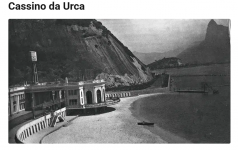
It was in the capital of Rio de Janeiro that Brazil's largest casinos were established. The most emblematic of all was the Cassino da Urca, founded in 1933 in a building that formerly housed the Hotel Balneário, facing Guanabara Bay.
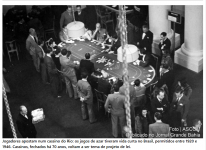
Players gamble at a casino in Rio de Janeiro: gambling had a short life in Brazil, permitted between 1920 and 1946.
Casinos, closed for 80 years, are once again the subject of a bill in Brazil.
For over a decade, gambling enjoyed a golden age in Brazil and brought many benefits to the country, not only in terms of entertainment. Tourism grew and casino-related activities generated thousands of jobs—over 40,000, according to estimates.
Casinos did not live solely on roulette, baccarat, blackjack, poker, and other games: they were also the stage for major shows, featuring national and international artists.

Casino da Urca folklore show 1941
Land-based casinos lasted only 12 years. On April 30, 1946, through Decree-Law 9,215, President Eurico Gaspar Dutra banned gambling throughout the country. It is speculated that he was influenced by his wife, who was very religious and opposed to gambling.

Copacabana Palace
Opened in 1923, the venue had one of the most important casinos in the country, which was also popular among American tourists. It was designed by French architect Joseph Gire and, according to some newspapers at the time, had a structure superior to the main casinos in Europe. For this reason, it was strategically built in the Copacabana neighborhood, dedicated to Rio's high society.
Eight decades later, gambling remains prohibited in Brazil, but there are bills pending in Congress to re-legalize the sector, although there is still much resistance from some more conservative and religious groups. The arguments in favor are that the establishment of casinos would attract tourists and generate jobs – as was the case in the 1930s and 1940s.
Opponents, on the other hand, fear that the practice will be associated with corruption and money laundering, in addition to contributing to personal and financial problems with addiction.
Although regulations for the return of physical casinos are still pending, the online gaming market continues to grow, with several international groups operating in the casino and online betting sector. They are, therefore, an alternative for those who want to gamble without leaving home.














 <3 Lovely post babes <3