Tips for tournament beginners.

I Live Poker

I Live Poker

Legend
Bronze Level

Joined
Oct 7, 2018
Total posts
3,377
Awards
5
Poker Chips
585
Casino Coins
0
  • #1
From a lover for amateurs!:icon_joke

My sincere thanks.
First, I would like to thank everyone who helped me directly and indirectly. For now I feel free from my ghosts, doubts and longings.
To those who did not give up and also to those who encouraged me to question myself and seek to extract the best from myself.

Recommendations:

If you are not a beginner and feel that there is nothing to add to your game, I ask that you do not interfere with the natural course of the discussion regarding the proper topic.
If you want to debate or show other points of view or even oppose the author in a good debate, I suggest the idea of ​​tagging the message in question along with a link to a topic of yours, justifying your counterpoint.
So we can spread our ideas more.
Ask questions participate and have fun!

Intentions:
Well the idea of ​​this topic is to approach in a very relaxed and simple way different subjects related to mathematics and poker tactics in the view of an amateur player "who learned in pain":banghead: :icon_studand proved by itself how much we want to neglect our errors .The author does not intend to convince about any absolute truth or even that he has any magic formula, it is just an exposition of his point of view and questions about all the mathematical structure and information that poker presents.

Well, we know that poker is a multidisciplinary and multifaceted sport, that's what makes it so interesting, intriguing and widespread.

There are many ways to become victorious! Have you found yours yet?


Coming soon with new content...
 

Attachments

  • foto CC nao a guerra.jpg
    foto CC nao a guerra.jpg
    169.1 KB · Views: 89
Last edited:
  • Like
Reactions: oroochimaru
BetterThanAvgButNotByMuch

BetterThanAvgButNotByMuch

Visionary
Bronze Level
Joined
Jan 1, 2022
Total posts
903
Awards
1
Poker Chips
265
Casino Coins
0
  • #2
Folks need to learn the basics before trying things like "Kill Phil" and "Modern Poker Theory". You have to know starting hands and tourn structure and learn what most likely is going to happen if you play a certain hand a certain way and you get that info by studying and experience.

There isn't a get rich scheme. You have to grind at one level and show that you can dominate that level then move up.

The same mistakes beginners were making 10-15 years ago are the same today but they talk more about "Modern Poker Theory" and playing more hands without having the experience and knowledge to play them.

And I'm sitting there listening to advanced players tell these folks to play what the "old school" players would consider trash hands not understanding basic starting hands and from what position to play them from thinking: these beginners are the same folks that say all my old poker books are "outdated" and worthless because they don't follow the latest trend but these folks don't understand the key principles behind those so called outdated, worthless books and still wonder why they can win like one tourn in a blue moon but their ROI is still negative lol.

GO BACK TO THE BASICS ABC STUFF AND FORGET ABOUT THOSE TRENDS. When you master the basics then move on to that stuff to expand your game. If these concepts were tools then I would be telling you to bring the basic tools like a screwdriver, hammer, tape and a basic toolbox to a job but these folks would be telling you to bring some fancy specialized tool that you don't need especially for the tourn levels or people you're going to be playing against. LEARN THE BASICS FIRST. Leave the KT, K5s, 5 high or whatever stuff for later, lol.
 
Last edited:
  • Like
Reactions: Kenzie 96 and BelFish
I Live Poker

I Live Poker

Legend
Bronze Level

Joined
Oct 7, 2018
Total posts
3,377
Awards
5
Poker Chips
585
Casino Coins
0
  • #3
Hi, thanks for the reply!

Hi, thanks for the reply! And also for the feed back and the positive ideas!
I totally agree with you, I see that you perfectly understood the purpose of this topic.
The practice combined with all the concepts you learned and selected for your mind set, when questioned and understood, your way is what makes you become the best of yourself.
There is no better style, or strategy or even trends in the field you play, these concepts change and if you don't keep an eye on what's really happening you will never extract the best use.
I see that we have a lot of similarities in our lines of reasoning, poker is like life you can even know what is right but there will be times when doing the pattern will not be the best option.
Poker is amazing because of that there is practically no right or wrong and yes what is the best decision to make right now based on as much information as I can compare, this is not easy to do at a table with just a few seconds to think , but practice and repetition will, over time, make this automatic.
I don't judge all content creators that they are standards, they are not wrong You have to know what a standard line is to be able to measure what you can work within it and get out of the ordinary and become Extraordinary!
The purpose of this initiative is to create an open debate and no frills or poker frivolities that only lend themselves to naming things, or just for communication purposes. However, I also couldn't stop thinking about Basico and created this other topic with poker preliminaries:
https://www.cardschat.com/forum/tournament-poker-59/introduction-preliminaries-poker-501547/
In summary, the intention here is to instigate the reader to seek his own essence within poker, and not focus on somewhat robotic tasks of a science that is purely exact, there is no chance of being wrong, this is the easiest for learn. The most difficult question is to know its limits, and to have knowledge of cause and not of effect.
As I am a musician and audio technician, I have one last sentence to tell you that might make sense:
A self-taught musician, even if he doesn't know how to read sheet music at some point, can learn to do it. But a musician whose training is erudite and the first thing he learned was to read will not necessarily be a good composer.
A hug and thanks for the reply!
 
Last edited:
I Live Poker

I Live Poker

Legend
Bronze Level

Joined
Oct 7, 2018
Total posts
3,377
Awards
5
Poker Chips
585
Casino Coins
0
  • #4
Equity, expected value and its variations in different situations.

Well Today I'm going to address a topic that I've been studying a lot currently, which is equity.

-What is Equity?
- Equity, in a simple way, can be seen as the percentage of chance of realizing what is most likely until the next street.
-What is Street?
-It is the name used corresponding to the four betting rounds (or turns) that a poker hand involves: Pre-flop, Flop, Turn and River.
- What is preflop, flop, turn and river?
-Well, if you don't know that, it's better to google it, my friend!:hahaha:


This is a very common region where beginner players make a lot of mistakes, it's where those sad stories of bad beats happen that end like this: - But the guy got his out on the river or: - he broke my AA with 67s!?
But most inexperienced players don't really know what to do or how to defend or even when to just call or raise. It may seem confusing at times but repetition and inquiry and research can get you down the road.
The confusion begins when in our head at the beginning of this journey we are faced with situations that seem to be identical to each other when in fact there are some specific details that make them differ and make it advantageous to make a different decision with the same cards and sometimes even the same positions, this will be approached here in a dynamic and comparative way from different angles.


Get to work!

Connecting suited hands vs Ax+ pre-Flop :

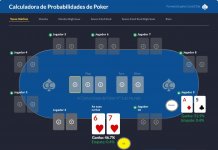
illustrative photo at the end of the post

1) BTN vs BB: Realize the equity of this hand, a 47% vs 53% chance.
-It looks great, doesn't it?
-And it really is!

Well in this first case without SB involvement, I would like to say that almost all moves would be good.
For example:
A) Effective stack of both players 100bb+ if you face a 2X, 2.2X and 2.5X raise, just completing would be a good move because it's a hand that plays very well post flop, as you can see in equity. However, I must say that a re-raise of 3X to 4X the opponent's initial raise (open raise) would also be very good, because then we will be working not only with the possibility of folding (fold equity) but also in case of a call reraise ( Flat) you still have some nice equity in your favor to develop postflop. In case of a 3X to 4X raise I would recommend just completing because you will play very well post flop, and a re-raise to get a fold would be around 3X to 4X which would already put a lot of chips in the pot making and finally committing you to a hand that you may not want to put all your chips in during the streets (streets)

*Note: This equity situation will always be found in ranges of two suited connectors that are greater than X.
Example: 89s vs A7o , TJs vs A9o , 45s vs A2o...

B) Effective stack from 25bb to 40bb with an open raise of 2.2X to 2.5X you will only complete many more times because you don't have enough chips to re-raise without committing to the pot on the post flop, making so that you are in an uncomfortable position to play without position. In cases of openraise from 3X to 4X I would recommend folding, for the same reasons mentioned above.
Note: of course you must have common sense and evaluate the opponent's tendencies and their possible ranges adapting the best action to this and the bb margin you have, there may be some exceptions both for reraise when closer to 40 bb and for flat sizes of 3X , 4X.

C) Effective stack 25bb- becomes -EV both reraise and flat, maybe except in cases where villain limps BTN I'll check the flop, but even jam would be uncomfortable in BTN's limp situation because there are a lot of traps in these spots , considering the tendencies of players who limp too often.

We also have to consider the possibility of Shovy(allin) by bluff depending on the villain's tendencies is a good move since if you have fold equity and if you get called you will face a situation similar to a flip coin(50%/50% both)
Note: Players who limp too much tend to do this with any two cards but also value hands, but that's a subject for another stack size approach.
I'm going to make a sequence of situations of this same type and in different ways throughout the days.

Hope this helps!:icon_thum
 

Attachments

  • exemplo 1 equidade.jpg
    exemplo 1 equidade.jpg
    120.1 KB · Views: 59
Last edited:
nuttea

nuttea

Visionary
Bronze Level
Joined
Aug 3, 2013
Total posts
504
Awards
3
Poker Chips
0
Casino Coins
0
  • #5
The best way to get a tip from your opponents is to keep an eye on them as they play each pot. Even if you're not in the hand, you still need to be as focused as possible on the game to understand how your opponents play. You have to notice how your opponent plays his weak hands and how he plays his strong hands. The more information you can extract from your opponents, the more opportunities you will have to outplay them.this is my advice)
 
  • Like
Reactions: BelFish
I Live Poker

I Live Poker

Legend
Bronze Level

Joined
Oct 7, 2018
Total posts
3,377
Awards
5
Poker Chips
585
Casino Coins
0
  • #6
nuttea said:
The best way to get a tip from your opponents is to keep an eye on them as they play each pot. Even if you're not in the hand, you still need to be as focused as possible on the game to understand how your opponents play. You have to notice how your opponent plays his weak hands and how he plays his strong hands. The more information you can extract from your opponents, the more opportunities you will have to outplay them.this is my advice)

Thanks for the reply my dear! I fully agree! but calm down this part will be discussed in the range balance:)

Follow along with the topics and it may be that at some point there may be something to add to your game!
 
Last edited:
I Live Poker

I Live Poker

Legend
Bronze Level
Joined
Oct 7, 2018
Total posts
3,377
Awards
5
Poker Chips
585
Casino Coins
0
  • #7
Equity, expected value and its variations in different situations.

In this topic we will cover some split equity situations and some mistakes that can be made as well as a misunderstanding of the expected value of your hand.

-What is expected value?
-It's how well your hand will perform along the streets taking into account the boards as well as what ranges you're facing.

In this case I will only address the pre-flop issue along with some mistakes players make in overestimating the value of their hand.
Many beginning players make the mistake of passively playing strong hands thinking they are drawing players into confrontation with weaker hands (slowplay). Well, here we will address the importance of aggression in your game and how much your decisions can influence the achievement of equity.


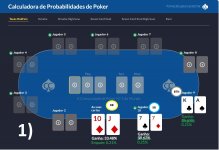
1) Here we have a situation of BTN, SB and BB in 3-handed and first I must emphasize the equity, notice how much it is divided with: (example at the end of the post)

AKo: 35.69%
77 : 30.63%
JTs: 33.48%
*It wouldn't be profitable to limp (just complete the mandatory bet) here, I know many players will say of course I shouldn't limp here but amazingly, many beginners will have this mentality. I would say that even an average size like 2.5 would be little, but it all depends on how you balance your range and what tendencies your opponent has, thinking about that you will make your decision based on what you want him to do. (but that's a topic for another topic on balancing your range.

2) Taking into account this information you already realize that you don't want to go into a post flop situation with AK against two three opponents (3-handed)
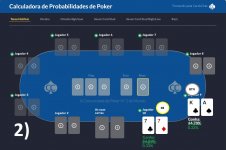
(example at the end of the post)

* In this situation then you open raise 3X the SB villain re-raises and the BB gives up his JTs, now you have the decision power in your favor besides having put some chips in the pot being the aggressor what you will give you the opportunity for some bluffs not to mention that you will play in position the post flop.
In addition to having increased his euity from 35.69% to 44.78%,
Now just decide if you want to make a 3-Bet (third raise bet), you just want to complete the reraise (flat) or even go allin, for a much better chance of practically 50%/50% (flip coin)


Stay tuned that there's still a lot more about equity!
Hope this helps!:icon_thum
 

Attachments

  • equidade 1 3 handed.jpg
    equidade 1 3 handed.jpg
    134 KB · Views: 42
  • equidade 2  obtendo fold.jpg
    equidade 2 obtendo fold.jpg
    120.7 KB · Views: 42
I Live Poker

I Live Poker

Legend
Bronze Level
Joined
Oct 7, 2018
Total posts
3,377
Awards
5
Poker Chips
585
Casino Coins
0
  • #8
Pot odds

Pot odds explained in a simple way would be the cost of a possible call in relation to the size of the pot, considering the EV, (the expected value) ie EV vs cost benefit of the call. There is a calculation to measure if the call will be profitable (+EV) in the long term, many players who are starting may think it's complicated, however I say it's not and also that you don't have to worry about doing this calculation in real time every decision that is in doubt between calling (flat) or folding.
We must keep in mind that practice, repetition and study are important, but when performed excessively in real time interfere with the natural flow of learning and especially with performance. Trying to force the execution of this calculation in real time on the table will only disturb and take your focus, taking Note that you will only have seconds to make a decision in online poker, so expect practice to make these decisions automatic and learn the math away from the table.
First of all, I should point out that the pot odds calculation should only be used in situations where you are losing and looking to improve your hand on the next street, (betting round) or that you at least think you are losing, since practically all poker dynamics it's based on assumptions."Otherwise we'd be talking about bluff cacht" but that would be a topic for another post.

Observations: The player must keep in mind that the pot odds calculation alone is not a miraculous formula to decide if the call is profitable or not, poker is an information game with several parameters and variables that must between them reveal the best decision. be taken.
"Sometimes it will be better to bluff the losing hand, depending on the opponent's fol 3-bet frequency";
"Sometimes it's better to fold even if you have pot odds to call, based on your image vs the opponent";
"Sometimes you'll call even though you don't have pot odds, based on your opponent's image, or even implied odds." (subject for another post)

Get to work

The calculation to know if you have pot odds to call is very simple, just add the pot value, plus the opponent's bet, plus the value of your possible call, and divide the value of your possible call by the total pot . This will result in a decimal number below 1 which will be converted to an integer percentage number. Well, let's go to the examples that will be easier!


Examples:

1) The pot has 2000 chips your opponent bets 500 chips, so we have to pay 500 chips to play a pot of 3000, so we will have:

500 / 3000 = 0.16 = 16%

* In other words, you will have to win this situation approximately once every six times "1/6" for your call to be profitable.


2) The pot has 2000 chips your opponent bets 650 chips, so we have to pay 650 chips to play a pot of 3300 chips, so we have:

650 / 3300 = 0.19 = 19%

* In other words, you will have to win this situation approximately one in five "1/5" times for your call to be profitable.


3) The pot has 3000 chips your opponent bets 1750 chips, so we have to pay 1750 chips to play a pot of 7000 chips, so we have:

1750 / 6500 = 0.26 = 26%

* In other words, you will have to win this situation approximately one out of every four "1/4" times for your call to be profitable.


4) The pot has 3000 chips your opponent bets 3000 chips, so we have to pay 3000 chips to play a pot of 9000 chips, so we will have:

3000 / 9000 = 0.33 = 33%

* In other words, you will have to win this situation approximately one in three "1/3" times for your call to be profitable.


5) The pot has 4000 chips your opponent bets 8000 chips, so we have to pay 8000 chips to play a pot of 20000 chips, so we will have:

8000 / 20000 = 0.4 = 40%

* In other words, you will have to win this situation approximately one every two "1/2" of the time for your call to be profitable.


Final considerations:

*Most of the time we will not have pot odds to call a bet profitably, in examples 1 and 2 we would have pot odds to call with a flush draw for example, in 9 outs situations, taking into account that 9 cards of 52 is = 17% , since in examples 1 and 2 we have 16% and 19% pot odds to call.

*In situations of 8 outs, which are the requests for straight, the Open Ended Straight. we have a little less, 15% which will make us need to have pot odds of 1/6 to make a profitable call.

*In examples 3, 4 and 5 we have demonstrations of calls that are not +EV, (profitable) however we should not worry, as these call situations will not be the majority and in such situations we will often turn the hand into a bluff due to some additional factors or information we have on our opponents, as well as position among others.

Hope this is helpful, don't hesitate to ask any questions.:deal:

Big hug!:icon_thum
 
Last edited:
dreamer13

dreamer13

Legend
Loyaler
Joined
Mar 18, 2022
Total posts
5,285
Awards
2
LV
Poker Chips
1,570
Casino Coins
15
  • #9
Many novice players are drawn to the prospect of a big one-time win, and tournaments are the best bet for these poker players. Play the early stage in a tight-aggressive style. It makes no sense to risk playing marginal hands while you have a huge amount of big blinds on your stack. In cheap tournaments, almost no one will follow your opponents. In case you have gone far in the tournament, managed to fill and keep a large stack, you should continue the game in a looser, but still aggressive style. Playing the top 10% of hands you are dealt may not be profitable anymore. You need to start "cutting" with other players. Watch your opponents. While most of the weaker players will have little chance of making it far in the tournament, they could just get lucky. Don't expect to win every tournament. In tournaments with kilopoles of players, you will need a huge amount of luck to win.
 
  • Like
Reactions: I Live Poker
BelFish

BelFish

Legend
Bronze Level
Joined
Aug 11, 2019
Total posts
2,396
Awards
3
BY
Poker Chips
312
Casino Coins
0
  • #10
I Live Poker said:
Examples:

1) The pot has 2000 chips your opponent bets 500 chips, so we have to pay 500 chips to play a pot of 3000, so we will have:

500 / 3000 = 0.16 = 16%

* In other words, you will have to win this situation approximately once every six times "1/6" for your call to be profitable.

About pot odds is written incorrectly.

If the pot is 2000 and the bet is 500, then the pot odds are not 16%, but 20%. We should win 1 time out of 5: call 4 times for 500 and lose 2000, and when we win, we get 2000 from the pot + opponent's bet of 500. In the result, it turns out that we bet a total of 2500 and we got back 2500. That's the breakeven point...

And all other examples need to be corrected.

P.S. And in the 4th and 5th examples, the biggest discrepancy: it should be 50% instead of 33% and 67% instead of 40%
 
Last edited:
BelFish

BelFish

Legend
Bronze Level
Joined
Aug 11, 2019
Total posts
2,396
Awards
3
BY
Poker Chips
312
Casino Coins
0
  • #11
LOL :D
Actually everything is correct. I wrote it all wrong, because i didn’t get enough sleep )))
 
  • Like
Reactions: I Live Poker
I Live Poker

I Live Poker

Legend
Bronze Level
Joined
Oct 7, 2018
Total posts
3,377
Awards
5
Poker Chips
585
Casino Coins
0
  • #12
dreamer13 said:
Many novice players are drawn to the prospect of a big one-time win, and tournaments are the best bet for these poker players. Play the early stage in a tight-aggressive style. It makes no sense to risk playing marginal hands while you have a huge amount of big blinds on your stack. In cheap tournaments, almost no one will follow your opponents. In case you have gone far in the tournament, managed to fill and keep a large stack, you should continue the game in a looser, but still aggressive style. Playing the top 10% of hands you are dealt may not be profitable anymore. You need to start "cutting" with other players. Watch your opponents. While most of the weaker players will have little chance of making it far in the tournament, they could just get lucky. Don't expect to win every tournament. In tournaments with kilopoles of players, you will need a huge amount of luck to win.
That's a great tip my dear! thanks for posting! this is advice, I would say, that's perfect for me too. For many times I was reluctant to try to make an A-game, or a bold game at the beginning of tournaments, at micro stakes. Without taking into account the level of the players and the range of reasoning (or meta game) they had. In fact, that's why poker is so charming and complex, there are a multitude of factors and nuances, and if you forget even one, as simple and fundamental as it is you can play, all your knowledge and skill in the trash. Thanks for the post, it's a good idea for another post. Hug!:)

BelFish said:
LOL :D
Actually everything is correct. I wrote it all wrong, because i didn’t get enough sleep )))

no problem my dear, pot odds always cause some confusion, even more sleepy!:goodnight:D
Probably you must have forgotten to add the value of your possible call to the total. Thank you very much for your reply and interest!:icon_thum
 
I Live Poker

I Live Poker

Legend
Bronze Level
Joined
Oct 7, 2018
Total posts
3,377
Awards
5
Poker Chips
585
Casino Coins
0
  • #13
I Live Poker said:
Pot odds explained in a simple way would be the cost of a possible call in relation to the size of the pot, considering the EV, (the expected value) ie EV vs cost benefit of the call. There is a calculation to measure if the call will be profitable (+EV) in the long term, many players who are starting may think it's complicated, however I say it's not and also that you don't have to worry about doing this calculation in real time every decision that is in doubt between calling (flat) or folding.
We must keep in mind that practice, repetition and study are important, but when performed excessively in real time interfere with the natural flow of learning and especially with performance. Trying to force the execution of this calculation in real time on the table will only disturb and take your focus, taking Note that you will only have seconds to make a decision in online poker, so expect practice to make these decisions automatic and learn the math away from the table.
First of all, I should point out that the pot odds calculation should only be used in situations where you are losing and looking to improve your hand on the next street, (betting round) or that you at least think you are losing, since practically all poker dynamics it's based on assumptions."Otherwise we'd be talking about Bluff cacht" but that would be a topic for another post.

Observations: The player must keep in mind that the pot odds calculation alone is not a miraculous formula to decide if the call is profitable or not, poker is an information game with several parameters and variables that must between them reveal the best decision. be taken.
"Sometimes it will be better to bluff the losing hand, depending on the opponent's fol 3-bet frequency";
"Sometimes it's better to fold even if you have pot odds to call, based on your image vs the opponent";
"Sometimes you'll call even though you don't have pot odds, based on your opponent's image, or even implied odds." (subject for another post)

Get to work

The calculation to know if you have pot odds to call is very simple, just add the pot value, plus the opponent's bet, plus the value of your possible call, and divide the value of your possible call by the total pot . This will result in a decimal number below 1 which will be converted to an integer percentage number. Well, let's go to the examples that will be easier!


Examples:

1) The pot has 2000 chips your opponent bets 500 chips, so we have to pay 500 chips to play a pot of 3000, so we will have:

500 / 3000 = 0.16 = 16%

* In other words, you will have to win this situation approximately once every six times "1/6" for your call to be profitable.


2) The pot has 2000 chips your opponent bets 650 chips, so we have to pay 650 chips to play a pot of 3300 chips, so we have:

650 / 3300 = 0.19 = 19%

* In other words, you will have to win this situation approximately one in five "1/5" times for your call to be profitable.


3) The pot has 3000 chips your opponent bets 1750 chips, so we have to pay 1750 chips to play a pot of 7000 chips, so we have:

1750 / 6500 = 0.26 = 26%

* In other words, you will have to win this situation approximately one out of every four "1/4" times for your call to be profitable.


4) The pot has 3000 chips your opponent bets 3000 chips, so we have to pay 3000 chips to play a pot of 9000 chips, so we will have:

3000 / 9000 = 0.33 = 33%

* In other words, you will have to win this situation approximately one in three "1/3" times for your call to be profitable.


5) The pot has 4000 chips your opponent bets 8000 chips, so we have to pay 8000 chips to play a pot of 20000 chips, so we will have:

8000 / 20000 = 0.4 = 40%

* In other words, you will have to win this situation approximately one every two "1/2" of the time for your call to be profitable.


Final considerations:

*Most of the time we will not have pot odds to call a bet profitably, in examples 1 and 2 we would have pot odds to call with a flush draw for example, in 9 outs situations, taking into account that 9 cards of 52 is = 17% , since in examples 1 and 2 we have 16% and 19% pot odds to call.

*In situations of 8 outs, which are the requests for straight, the Open Ended Straight. we have a little less, 15% which will make us need to have pot odds of 1/6 to make a profitable call.

*In examples 3, 4 and 5 we have demonstrations of calls that are not +EV, (profitable) however we should not worry, as these call situations will not be the majority and in such situations we will often turn the hand into a bluff due to some additional factors or information we have on our opponents, as well as position among others.

Hope this is helpful, don't hesitate to ask any questions.:deal:

Big hug!:icon_thum

Just remembering that the percentage of pot odss is correct, but the examples with the fraction, 1/5 ,1/4,1/3,1/2 are approximate, even because so much punctuality is not necessary for the practical use of pot odds. The intention here is to dissolve the unnecessary part of the practical math in poker. Bearing in mind that it can often be the biggest cause of confusion for new players. Understanding the poker spirit that is real learning, math is important, but it's just an integral part of many other parameters and information.:)
 
I Live Poker

I Live Poker

Legend
Bronze Level
Joined
Oct 7, 2018
Total posts
3,377
Awards
5
Poker Chips
585
Casino Coins
0
  • #14
Range Balance

Hello friends and poker players, today I'm going to address this topic that is one of my favorites in practice. In fact, it is a very simple topic, if it weren't for such interest, I would have little to say about it.
Range balancing would briefly be: diversify your default plays, pre-stipulated "by range, position, size bet" so that your play doesn't become predictable.
If a player always makes the same robotic moves according to each situation that arises, even if he can have profits, or a high frequency of prizes, this does not exactly mean that he is an excellent player, and he will probably become easy prey for players more attentive to these patterns.

When approaching this subject, I could not fail to mention the (GTO) Game Theory Optimal, as well as the real-time support software that is currently used by many players of different levels. I don't judge or underestimate the value of such tools, however, in my opinion the real value of them is understanding the basis of Poker and then diving deeper into the ocean of information and nuances of Poker, with a little more clarity. I will have to agree, that in micro tournaments, and in the early stages the use of GTO and tools will give a big advantage due to the greater number of recreational players, however in the later stages of tournaments you will see the GTO players being overwhelmed by the players with higher experience and feeling in this regard.


Get to work

Range balancing is directly related to your action and the size bet, you should also look at your opponents' image and trends as well as the image and patterns you're passing on to them, (meta game) "we'll get into that in another further opportunity" with the intention of inducing your opponent to do what you want him to do, based on what he believes you would do;

-Do you understand the magic of this process?
However, this technique will not always work due to some factors among them:

* The player is an aspiring, recreational player and is not even paying attention to anything you are doing, he just plays the cards he receives; "with one caveat, you should already know this before facing him".:dontknow:

* The player is paying attention to you, is a strong and attentive player and has noticed some pattern that made him believe that you are bluffing and taking advantage of his image and range balance; "There's no escape in this one is gg":pcguru:

* The player has a great hand made, or a strong hand pre-flop and doesn't even care what you're doing; "he was just praying for you to go all-in or for him to bluff":argh::laugh:

Finally, I would like to point out that range balancing is not only useful for playing aggressively, we can often simulate some bluffs with low size bets, "as if we wanted to be called". We can also simulate weakness by playing passively with very strong hands (slowplay). What we have to keep in mind is that creativity together with the mixing of patterns, in the face of situations that are presented to you, is what makes the difference.

Let's look at some practical examples:

*You open raise 2X UTG, UTG 1 and MP with AJs+ and 99+ so at a low frequency depending on all the factors mentioned above you will also open raise with ATo+ and 55+

*You open raise 2.5X MP , MP1 with AXs+ and 55+ so you'll have to get some open raise frequency with KJs+ and 22+

* You open raise 3X HJ and CO with JTs+ and 22+ it would be good for you to farser open raise with some suited connectors and some Ax like 56s+ and A8o+


Comments:
The same will happen for 3-bet, 4-bet, resteel, reshove situations, always balancing the value and bluff ranges in a way that you confuse and make it difficult to read your opponents.
The examples above are not some kind of table that you should strictly follow, they are simply hypothetical examples for the purpose of comparison and assimilation of the fundamental itself, adapting the concept in the best way in your range. Always taking into account as much information as you have and can use to support your decisions, as mentioned in the text above.

I hope I have contributed in some way, if I contributed a grain of sand I will be happy.
A hug!:icon_thum
 
BelFish

BelFish

Legend
Bronze Level
Joined
Aug 11, 2019
Total posts
2,396
Awards
3
BY
Poker Chips
312
Casino Coins
0
  • #15
I would also add that it is necessary to observe "invariance" with such balancing.
Good proportions of value bets and bluffs on the flop, turn and river considered (for half pot and pot bets respectively):

Flop: 40% : 60%
Turn: 60% : 40%
River: 75% : 25%

Flop: 33% : 67%
Turn: 50% : 50%
River: 67% : 33%

That is, for example, if we bet the size of a pot, then on a flop we have 2 of 3 bets are bluffs and 1 of 3 - value bets.

P.S. Maybe, of course, it's a little different for tournaments, but in cash games it's something like this...

As for preflop balance, i don't know for sure. In charts, this is usually taken into account using "weights" and different colors.
 
Last edited:
I Live Poker

I Live Poker

Legend
Bronze Level
Joined
Oct 7, 2018
Total posts
3,377
Awards
5
Poker Chips
585
Casino Coins
0
  • #16
BelFish said:
I would also add that it is necessary to observe "invariance" with such balancing.
Good proportions of value bets and bluffs on the flop, turn and river considered (for half pot and pot bets respectively):

Flop: 40% : 60%
Turn: 60% : 40%
River: 75% : 25%

Flop: 33% : 67%
Turn: 50% : 50%
River: 67% : 33%

That is, for example, if we bet the size of a pot, then on a flop we have 2 of 3 bets are bluffs and 1 of 3 - value bets.

P.S. Maybe, of course, it's a little different for tournaments, but in cash games it's something like this...

As for preflop balance, i don't know for sure. In charts, this is usually taken into account using "weights" and different colors.
Thanks for the post my dear, well remembered! I didn't mention this question so punctually so as not to extend the topic too much, but if you notice I mention this question in a generic way. It's a somewhat subjective subject, so I didn't want to delve too much into the exemplification, but into the basic concepts, since the topic aims to reach players who are starting.


here in this part:

Finally, I would like to point out that range balancing is not only useful for playing aggressively, we can often simulate some bluffs with low size bets, "as if we wanted to be called". We can also simulate weakness by playing passively with very strong hands (slowplay). What we have to keep in mind is that creativity together with the mixing of patterns, in the face of situations that are presented to you, is what makes the difference.


There are these other parts that I also pointed out that the examples are hypothetical: (in my opinion the most important thing is the concept itself and how you organize it within your range and style of play)
The same will happen for 3-bet, 4-bet, resteel, reshove situations, always balancing the value and bluff ranges in a way that you confuse and make it difficult to read your opponents.
The examples above are not some kind of table that you should strictly follow, they are simply hypothetical examples for the purpose of comparison and assimilation of the fundamental itself, adapting the concept in the best way in your range. Always taking into account as much information as you have and can use to support your decisions, as mentioned in the text above.

Your participation is very important, could you explain in a more didactic and exemplified way your point of view? so that new players understand what you mean. I understood!
But it is very valid, thank you!:)
 
Last edited:
BelFish

BelFish

Legend
Bronze Level
Joined
Aug 11, 2019
Total posts
2,396
Awards
3
BY
Poker Chips
312
Casino Coins
0
  • #17
I took information from Janda's book (Matthew Janda "Applications of No-Limit Hold'em").

With some assumptions within the framework of the mathematical model, it comes to approximately the so ratio of value bets and bluffs. With these frequency ratios, there is not much difference to us how exactly the opponent plays. The number of bluffs decreases on every street, and on the river, when the bets are at their highest, most of our bets are value bets. If we bluff more or less often, then there will be a over-bluff or an under-bluff, respectively, and we will lose part of the EV...
 
  • Like
Reactions: I Live Poker
messats

messats

Rock Star
Bronze Level
Joined
May 28, 2020
Total posts
354
Awards
1
LC
Poker Chips
35
Casino Coins
0
  • #18
nuttea said:
The best way to get a tip from your opponents is to keep an eye on them as they play each pot. Even if you're not in the hand, you still need to be as focused as possible on the game to understand how your opponents play. You have to notice how your opponent plays his weak hands and how he plays his strong hands. The more information you can extract from your opponents, the more opportunities you will have to outplay them.this is my advice)


tips for beginners would be to learn the basics, be open minded, watch some pro vids, learn about odds calculations, learn how to collect information, dont be flowchat- to predictable, be patient
 
  • Like
Reactions: I Live Poker
I Live Poker

I Live Poker

Legend
Bronze Level
Joined
Oct 7, 2018
Total posts
3,377
Awards
5
Poker Chips
585
Casino Coins
0
  • #19
messats said:
tips for beginners would be to learn the basics, be open minded, watch some pro vids, learn about odds calculations, learn how to collect information, dont be flowchat- to predictable, be patient


Hello my dear Thank you for participating. I would like to mention that I created another thread talking about poker prelims as well as its initial fundamentals.:)

Link to topic:
https://www.cardschat.com/forum/learning-poker-57/introduction-preliminaries-poker-501547/
 
dompoker

dompoker

Legend
Platinum Level
Joined
Jul 22, 2019
Total posts
1,153
Awards
2
Poker Chips
710
Casino Coins
0
  • #20
I have read interesting things here, I will put them into practice when I play poker.
 
  • Like
Reactions: I Live Poker
dreamer13

dreamer13

Legend
Loyaler
Joined
Mar 18, 2022
Total posts
5,285
Awards
2
LV
Poker Chips
1,570
Casino Coins
15
  • #21
Winning in cheap tournaments is simple and very profitable,but it takes a long time.If suddenly at any stage of the tournament your stack becomes small relative to the blinds (15bb with ante and 10bb with blind levels without ante),more on to push-fold.In case you have gone far in the tournament,managed to fill and keep a large stack,you should continue the game in a looser,but still aggressive style.
 
BelFish

BelFish

Legend
Bronze Level
Joined
Aug 11, 2019
Total posts
2,396
Awards
3
BY
Poker Chips
312
Casino Coins
0
  • #22
dreamer13 said:
Winning in cheap tournaments is simple and very profitable,but it takes a long time.If suddenly at any stage of the tournament your stack becomes small relative to the blinds (15bb with ante and 10bb with blind levels without ante),more on to push-fold.In case you have gone far in the tournament,managed to fill and keep a large stack,you should continue the game in a looser,but still aggressive style.
Now there is such a trend in online poker tournaments that antes are introduced from the first game levels... :mad::smile::D
 
  • Like
Reactions: I Live Poker
Poker Tips
Top