Would you look? A cash game dilemma...

  • Thread starter Thread starter Tammy
  • Start date Start date
I think this is a very interesting situation because there is a difference between noticing something accidentally and intentionally trying to gain information from another player’s mistake.

If I noticed a player was exposing his cards, I would probably warn him once, like in the example. After that, I would try to focus on my own game instead of looking for his cards. Even if he refuses the advice, intentionally watching his hand feels like crossing a line.

I don’t think it is the same as traditional cheating because you are not using marked cards or colluding with someone, but it does create an unfair advantage and goes against the spirit of the game. Poker is about reading situations, betting patterns, and making decisions, not taking advantage of someone who is unknowingly showing private information.

For me, the right thing to do is protect the integrity of the game.
 
Tammy said:
Part of being successful in poker (just like life in general) is to think about various situations ahead of time and decide how you would react. When the time comes, whether you change your mind or not, you at least had a plan of action in mind beforehand.

So what would you do in this situation?

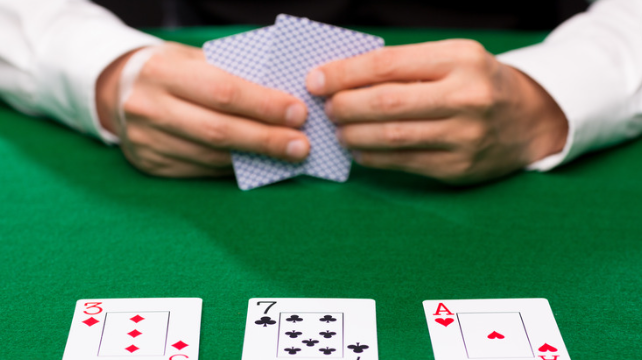
The young, aggressive cash player next to you isn't doing a great job of protecting his hand. The way he looks at his cards makes it really easy for you to see what he has. You quietly let him know to be careful, but he just laughs and tells you to worry about your own game. Would you keep looking at his cards when you get a chance? And do you think this is a form of cheating if you do look? Why or why not?

412cc133bedbdeb9e176f887e2b157f6.png


You can earn 10 VIP Chips with a thoughtful, quality reply to this thread.
Once you’ve given a player a polite courtesy warning and they dismissively tell you to mind your own business, your ethical obligation ends right there.
Here is how I view the situation:
* Is it cheating? No, absolutely not. Cheating involves active rule-breaking—such as colluding, using hidden devices, or physically bending over/craning your neck into another player's space to peek. Protecting your cards is the fundamental responsibility of every player at the table.
* Would I keep looking? I wouldn't go out of my way to crane my neck or lean over to peek into his hand, but I'm certainly not going to close my eyes or alter my natural posture either. If his cards remain visible in my normal field of vision after I already warned him, that’s entirely on him.
Information is the main currency in poker. If an opponent actively chooses to broadcast their hand after being warned, taking advantage of the information handed to you in plain sight isn't cheating—it's just accepting a free edge from a careless player.
 
Honestly? Yeah, I'm looking every single time, as long as I don't have to break my neck or lean over his chip stacks to see them.

You did your due diligence by tapping him on the shoulder. You gave him a free pass out of courtesy, and he decided to flex his ego instead of fixing his mechanics. At that point, his hole cards are basically community cards for anyone sitting in your seat. As for whether it's cheating: absolutely not. Cheating requires active deception or breaking the actual rules of the game. We're talking about colluding, marking deck cards, or actively rubbernecking into someone's lap. Passively keeping your eyes open while sitting normally in your chair is just using the information presented to you.

Poker is a game of incomplete information, and physical discipline is part of the skill set. If a guy leaves his front door wide open after you explicitly told him it was unlocked, that's on him. You aren't a burglar for noticing the TV is on.

Would any of you handle this differently if it was a friendly home game with buddies instead of a random casino floor?
 
I wouldn't intentionally try to look at my opponent's cards. After warning them once, it's their responsibility to protect their hand. If I accidentally see a card, I can't pretend I didn't, but I also wouldn't go out of my way to gain an unfair advantage. Poker is a game of skill and integrity, and respecting the game is more important than taking advantage of someone else's mistake. Protecting your own cards is every player's responsibility, but good sportsmanship should always come first.
 
I would tell the player once, just like in this situation. If they choose to ignore the warning, that's their responsibility. However, I still wouldn't intentionally look at their cards. I want to win because I made better decisions, not because I had extra information. For me, poker is more enjoyable when everyone has a fair chance and the game stays honest.
 
This is a tough river spot. I’d probably slow down and think about the hands villain can realistically have before deciding whether to call.
 
Back
Top