The Power of Position (Day 1 Course Discussion)

  • Thread starter Thread starter Debi
  • Start date Start date
Adding the effect of additional action after you open

Hi guys,

Thanks for sharing this free resource, I think you've done a good job keeping chapters concise, while still having the right level of detail.

My one thought would be to include a brief mention of how 3-betting effects the power of your position. For instance, if you open from the button and the big blind 3-bets you how does this influence the 'power' of your position. This might be a good segue into the 'aggression' chapter too.
 
  • Like
Reactions: pablo lima and dipstick2
johnnylawford said:
Hi guys,

Thanks for sharing this free resource, I think you've done a good job keeping chapters concise, while still having the right level of detail.

My one thought would be to include a brief mention of how 3-betting effects the power of your position. For instance, if you open from the button and the big blind 3-bets you how does this influence the 'power' of your position. This might be a good segue into the 'aggression' chapter too.



Position is very important in both large pots as well as with deeper effective stacks. So I'd have to say it's super-important in both a 3-bet pot (larger pot) or single-raised pot with deeper stacks 🙂
 
wizcup said:
Hi Collin and Katie!

Thanks for the video.

However, I have a question which sometimes troubled me.

When we are on button or CO position and before us someone on UTG or UTG+1 raises with 3BB+, what should we do when we doesn't have best starting hand? Let's assume it's K10o or Q10o.

I'm asking because in every course it says about late position being looser. And sometimes I met people who raise in early position with premium hands and sometimes maniac who does not have anything.

FYI, I am still on NL2.

Collin Moshman said:
Wizcup, You should generally fold almost any offsuit broadway hand in late position facing an early position raise. Against a very loose opponent, calling with KQo would be reasonable. But as a rule of thumb, you should fold there because you're too easily dominated and these hands don't play as well as the suited broadway hands.

We'll go into a lot more detail on this in future days of the course too 🙂


Does this decision depend on the size of the preflop raise? If a mini-raise (+1 BB) is made by an odd player from an early position, and we have KQo, does it make sense to make a call? It is clear that on a raise of a larger size, it will be correct to fold. But will we have a chance to call a mini-raise?

Thanks in advance.
 
Andrew Popov said:
Does this decision depend on the size of the preflop raise? If a mini-raise (+1 BB) is made by an odd player from an early position, and we have KQo, does it make sense to make a call? It is clear that on a raise of a larger size, it will be correct to fold. But will we have a chance to call a mini-raise?

Thanks in advance.
Yes, what we're willing to call with in that kind of spot depends somewhat on the size of the open. There are two factors that I most take into consideration when making such a call. The first is implied odds/reverse implied odds. The second key factor is any read that I have on the player.

Let's say we have KQo on the button versus a UTG min-raise. If this is up against a reg, I prefer just folding due to reverse implied odds--because his range for opening UTG is so tight that a lot of the time I make a hand and a pot builds, I would be second best. Plus, in the event that I flop huge, a reg is a lot less likely to get out of line so that limits my potential upside (i.e. implied odds) quite a bit.

Against a UTG maniac however, I would call with the same hand, in large part because we do not have the same concerns with reverse implied odds since we could expect that kind of opponent to pay off on more boards where we have the best hand, and the player's opening range is much wider than the reg's we initially discussed here.
 
  • Like
Reactions: Morghulies, Aballinamion, Collin Moshman and 1 other person
Position is one of the most important things to play in tournament poker, the most profitable game will be if you use it correctly! Thanks for the course!
 
Day 1; position in poker.

Thank you for this course!
Question; I recently started to play 10 handed tournaments. How do I consider the positions if the number of players diminishes? And how does this effect the way I look at the cards of my opponents?
And yes....I am a lousy player, but enjoy the game very much and hope to improve.
 
The power of being in position will not change just because there are fewer people. What will tend to change is the ranges of your opponents. The ranges will be wider and most people will be playing them more aggressively.
 
  • Like
Reactions: Scylax
Katie Dozier said:
Against a UTG maniac however, I would call with the same hand, in large part because we do not have the same concerns with reverse implied odds since we could expect that kind of opponent to pay off on more boards where we have the best hand, and the player's opening range is much wider than the reg's we initially discussed here.

Thank you, this is a good logic of action!
 
  • Like
Reactions: Katie Dozier
Power of position

Some more good information on this thread and I do believe in the power of position ! 🙂😀😛😉🙄:fight:
 
  • Like
Reactions: Collin Moshman
Position is everything, I have listen about one person that use only position without see the cards and get the second in position in a tournament with 360 persons.
 
  • Like
Reactions: Collin Moshman
This is awesome!

This is a great course I'm excited to learn more!
 
  • Like
Reactions: Collin Moshman
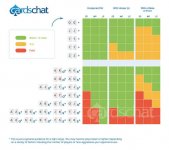
Something I'm a bit confused about - in some materials (like for example starting hands to play, from which position), the positions are divided early/mid/late, and there is not a separate category for the blinds. If we don't get into nuances of playing from the blinds, and just use these general advice tables, should we look at them as EARLY (as they act first after the flop so we should base their position on that) or LATE (as they're the last to act pre-flop and have information about all the actions pre-flop)?
 
  • Like
Reactions: Morghulies
The blinds are unique and should be treated as such. You have the downside of being out of position, but the benefits of increased pot odds and possible wide late position ranges. Often you will be playing against a wide range (like a button open) for a great price and can defend with a wider range. Other times, you will be up against an early position open and will need a much tighter range to show a profit.

You can't just say "use early position hands" or "use late position hands" when it comes to the blinds.
 
vinnie said:
The blinds are unique and should be treated as such. You have the downside of being out of position, but the benefits of increased pot odds and possible wide late position ranges. Often you will be playing against a wide range (like a button open) for a great price and can defend with a wider range. Other times, you will be up against an early position open and will need a much tighter range to show a profit.

You can't just say "use early position hands" or "use late position hands" when it comes to the blinds.


Thanks, yes, I saw the videos on blinds, and in the book they're separated, but I've been consulting another starting hands chart from CardsChat (with limpers etc. - see attached) and so was wondering if they put the blinds in there or they were just completely out of that one.
 

Attachments

  • starting-hands-chart.jpg
    starting-hands-chart.jpg
    50.9 KB · Views: 39
  • Like
Reactions: Morghulies and Aballinamion
Never think on that form

I never think the importance of the positions. but we need a high level of memory on our brains, or make a chart to read more easily and fast how made your play... TYVM

:ciao:
 
That chart doesn't seem to include the blinds. They would decide the hands to play based on where the open or limp was, the range of that player, and the style of that player. The range of the blinds is too dynamic to make a chart.
 
good day. I can not find this information. Tell me, please, where can I read and see it? thank.
 
alex_dorda said:
Is this course in English only?:fight:

Yes, for now it's only available in English.

lollipopas said:
Something I'm a bit confused about - in some materials (like for example starting hands to play, from which position), the positions are divided early/mid/late, and there is not a separate category for the blinds. If we don't get into nuances of playing from the blinds, and just use these general advice tables, should we look at them as EARLY (as they act first after the flop so we should base their position on that) or LATE (as they're the last to act pre-flop and have information about all the actions pre-flop)?

The blinds are unique positions as Vinnie says. But if you had to categorize them, your best option would be late position. Your small blind first-in range is closest to your button first-in range. From the big blind, you can often play a very wide range because opponents are min-raising and you're getting a great price.

zwbb said:
good day. I can not find this information. Tell me, please, where can I read and see it? thank.


Day 1 of the course is available here.
 
"power of the position" is not an empty sentence🙂
 
  • Like
Reactions: Katie Dozier
It is impossible to dispute that playing with position is very important and essential for your game, but it is necessary to study to develop the best technique of how to play at each moment and each position.
 
Back
Top