
What Does Insurance Mean in Blackjack?
Insurance bets are simple to understand but can be tricky to get right. They are a type of side bet that act as a safety net against the dealer having Blackjack. You can only play an insurance bet if the dealer's upcard is an Ace and the insurance period ends when their second card is revealed. Read on to find out when to make an insurance bet and get the lowdown from our very own Mr Blackjack on making your bets count.


How does an Insurance Bet work in Blackjack?
Blackjack insurance is a side bet that is usually half your original wager and pays 2 to 1. The only time to play insurance is if the dealer's upcard is an Ace, you have a hand of 15 or more, and you are confident the dealer's second card will give them Blackjack.
If these circumstances are not right, we would recommend letting the chips fall where they may and continuing with the hand as normal.
What every player should know about insurance bet in blackjack

Blackjack Side Bets 101
SEASON 4 / LESSON 1
Blackjack Insurance Example
Here is a quick step-by-step guide of play:
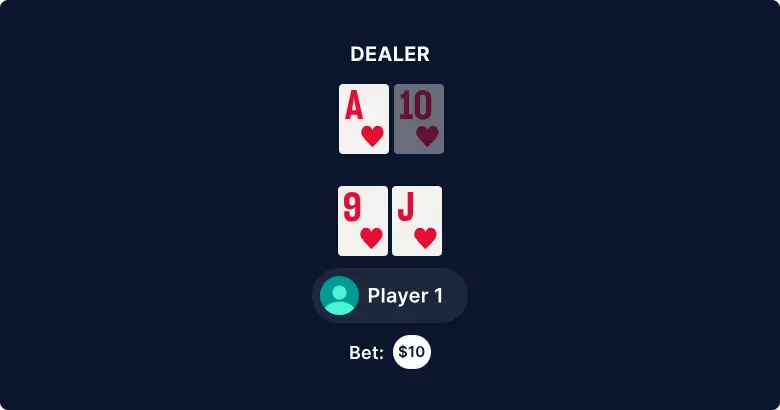
Winning Blackjack Insurance
- You place a bet for $10
- You are dealt a 9 and a Jack
- The dealer's upcard is an Ace
- You take insurance for an additional $5
- The dealer's second card is revealed to be a 10 point card, giving them Blackjack
- You win your insurance bet and break even (making $15 in this example).
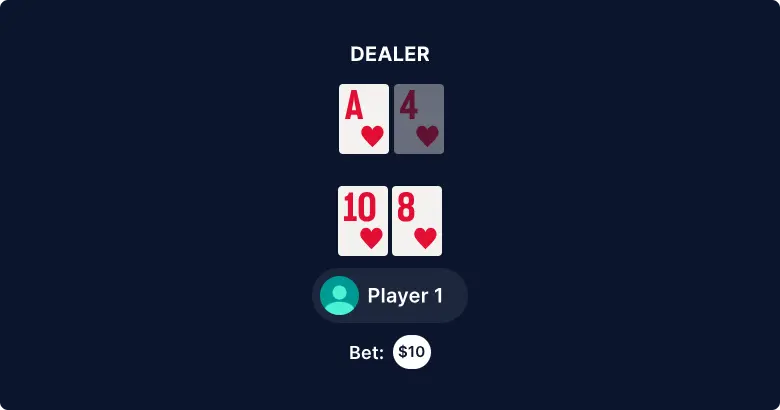
Losing Blackjack Insurance
- You place a bet for $10
- You are dealt a 10 and an 8
- The dealer's upcard is an Ace
- You take insurance for an additional $5
- The dealer's second card is revealed to be a 4
- You lose your insurance bet but continue the hand to see if the dealer can beat your 18 hand total.

CASINO US PRO TIP
This type of side bet is usually better for more advanced players as knowing basic strategy and card-counting can really help push the odds into your favor and make paying insurance worthwhile.
When Should I Take Insurance?
The best time to place an insurance bet is when the dealer's upcard is an Ace and you have a decent hand yourself of 15 or higher. That way, even if you lose your insurance bet, you might still be able to win the round.
On average, players lose more than half of the insurance bets made and since the bet pays out 2 to 1, it can turn into a losing proposition.
Statistically, insurance bets can lose you money in the long run, especially if you're not familiar with card-counting or basic strategy.
What are the Odds for Insurance Bets?
The exact odds of winning an insurance bet vary from game to game and depend on a variety of factors from the number of decks being used to the number of 10-point cards that have already been dealt.
On average, the odds of the dealer making Blackjack is 9 to 4.
It might look stacked against players but those skilled in basic strategy and card-counting might be able to keep track and identify when the conditions are perfect to make a profitable insurance bet.
Although this can be tricky when playing online blackjack, we suggest playing a few rounds of free blackjack to get a feel for the odds and get used to making insurance bets.
If you want to play live dealer or real money blackjack, it's important to also consider the number of decks being used. The higher the number of decks, the higher the odds are for potentially losing your insurance bet.
MR BLACKJACK'S VERDICT
The insurance bet has a 3% house advantage and will only pay off when the dealer has a 10-point card, which happens 30% of the time.
Even with the payout being 2 to 1, the casino is getting a 3% discount on the payout so every time you take insurance, you are effectively giving the casino 3%.
If you're counting cards with the true count being +8 or better, plus a deck rich in 10s, it could be argued that the odds fall closer in your favor. However, as a general rule, the insurance bet is a pass from me.

Mathieu Blake
Professional Blackjack Player