Lesson description
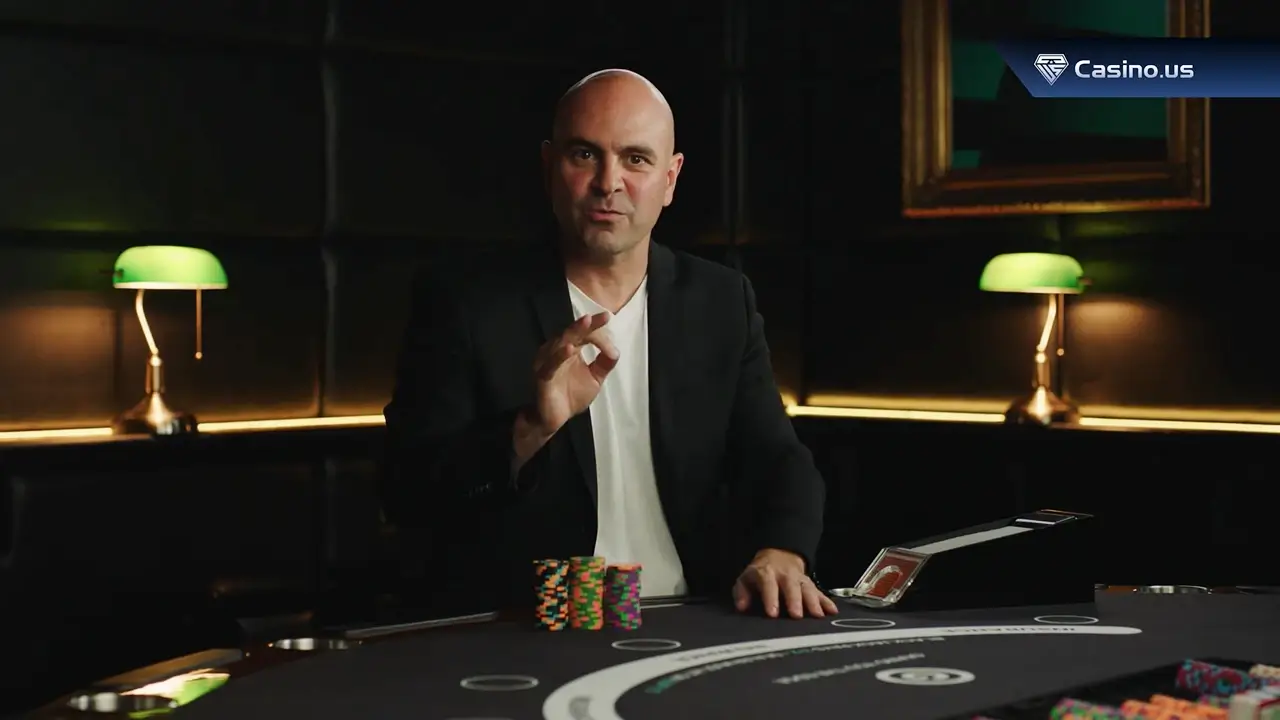
Mr Blackjack shows you his tip for determining how much money to take to the casino. Learn bankroll management skills that let you play responsibly in blackjack.
I get this question a lot: 'How much should I bring to the casino when I want to play blackjack?' To know, you should ask yourself two questions:
- Am I going to have fun?
and
- Am I going to make money?
Both of those have very different answers and have questions in them themselves.
If you are going to have fun, you should consider how much you usually spend on dinner and drinks. $100-200, maybe?
So if that's what you spend on roughly two hours at the restaurant, then you should be happy and have no regrets about spending $200 in bets while being entertained at the table with some non-stop betting, doubling, and splitting blackjack action.
If the goal is to make a profit, you have to establish your bankroll and your overall goal in the short term and the long term.
Your bankroll is a set amount of money that you have decided to dedicate in the pursuit of more winnings over a set period. It is directly related to the amount of money you want to invest in this long-term process.
Let's say you have a total bankroll of $2,000 and your long-term goal is to bring your $2,000 to $10,000, a 5X return on your investment.
I would suggest bringing 10% to the casino with you as an initial buy-in, with an extra 10% as a rebuy just in case you get a few blackjack shoes that go the wrong way.
So, that means you bring $400, or 20% of your bankroll, to a session. You sit down with $200, and if you lose the $200, you play the next $200.
If that disappears, you get up and go home and come back another day.
Your short-term goal should be to make anywhere between 3x to 5x your money on any given night. Using our previous example, once you reach $600-1,000 from the initial $200-400 buy-in and the hot streak is over, you should call it a night and come back another day.
The nightly bankroll management of 20% of your total bankroll is a guideline. It's a good one to follow because it allows you to control your spending while on a downswing.
There is nothing worse than playing catch-up and trying to make up losses. There are some times when you will not make up the losses on that same night. But over time, the math evens out, and you will come out ahead.
Next up, we're covering how much you should be betting at the blackjack table to give you the best chances of winning. Stay with us to learn more secrets to playing smarter blackjack.