Lesson description
Splitting your hand may offer double rewards; do it on the wrong cards though, and you risk losing more. Learn basic strategy on when to split with Mr Blackjack.
Splitting is one of the most exciting moves in blackjack because it allows you to double your wager and play two hands at once.
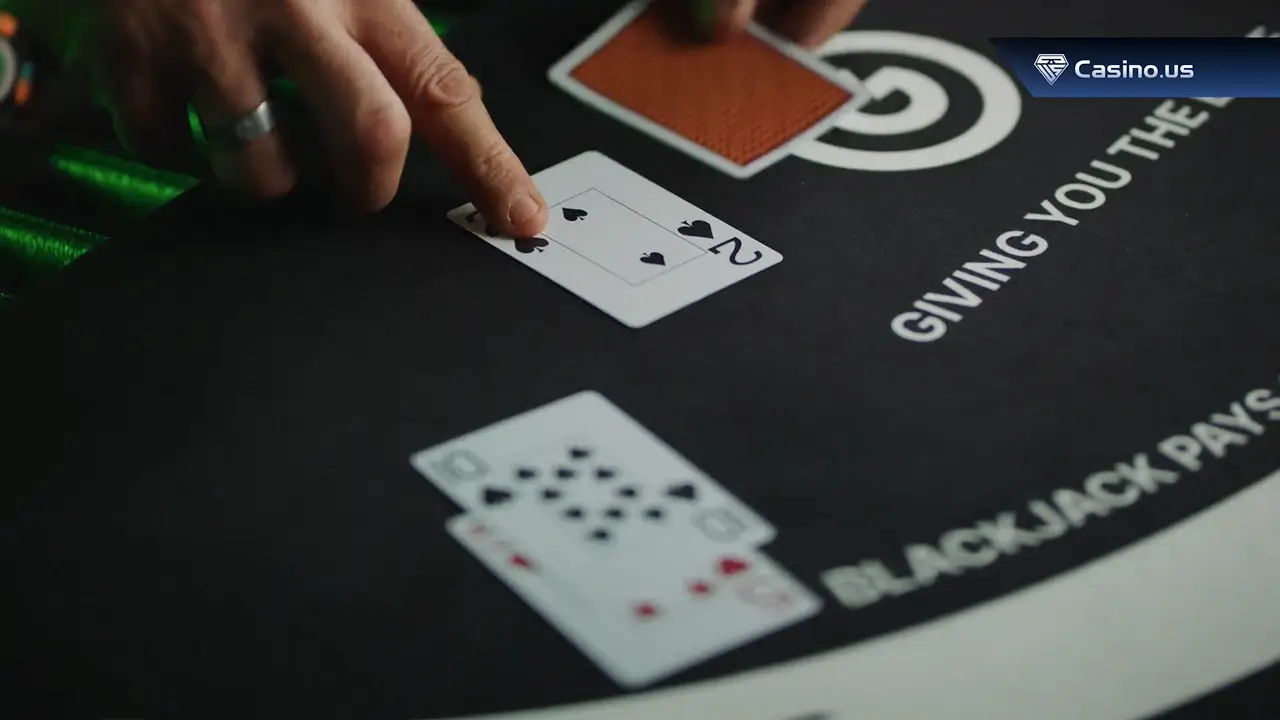
In blackjack, you are allowed to split any two cards with the same value: two 5s, two 9s, and even two 10s or a Jack and Queen.
Casinos only allow you to split cards of the same value. It’s not always advantageous to do so, but you are allowed. When to split falls to basic strategy and math.
First off you never, ever split 5s and you should also never split 10s. The former is because two 5s give you 10, and the math says that you will always make a better hand when you start with a 10 than when you start with a five.
You never split 10s because you have 20, and 20 is considered a very good hand that wins most of the time. You don’t want to split up a hand like that, only to hope to catch a hand with a value of 20. It's better to stay on the 20 and take your winnings.
There are also circumstances when the decision to split your hand depends on the dealer's up-card. If the dealer is showing a 2-6, that is considered a bust card; you should split any pair except for the ones we just discussed in order to double your bet. Try to get two hands that will potentially beat the dealer because he is showing a bust card.
So, to recap. You should never split:
- 5s
- 10s
And you should split:
- Aces
- 8s
And depending on the dealer's up-card, you should split when:
- Dealer up-card 2-7 vs player pairs of 2s, 3s, or 7s
- Dealer up-card 2-6 or 8-9 vs player pair of 9s
Now that you know the essentials to splitting, it's time to look at surrender, one of the most misunderstood moves in blackjack.